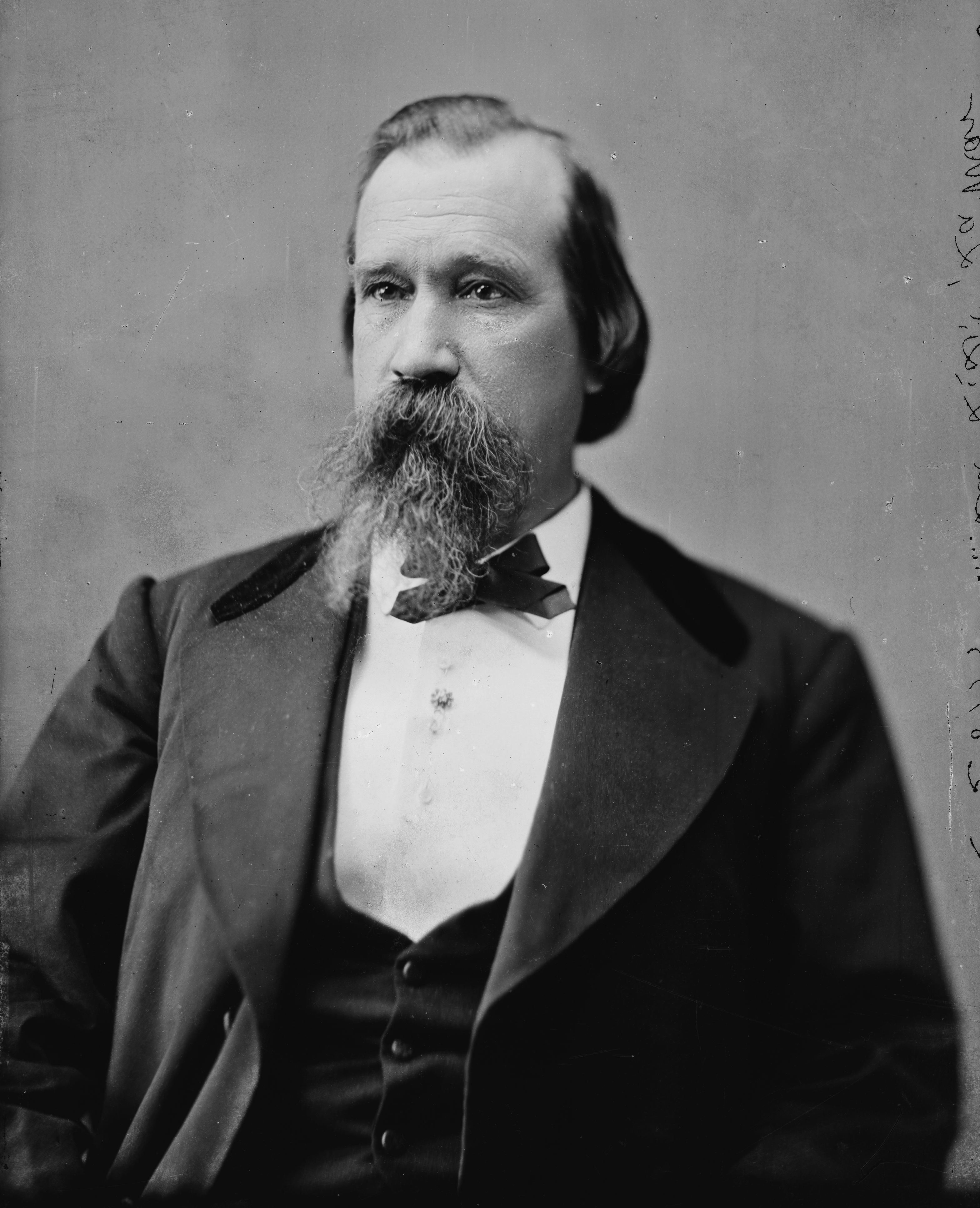
Monday, October 24, 2011

Battalions Strengthened by Ideas

This entry is from Lucy Larcom:  Life, Letter and Diary edited by Daniel Dulany Addison.

Larcom was a former mill worker, poet, teacher and abolitionist.  Here is any entry from her diary wherein she discusses a lecture she heard by Charles Sumner, who was known as a powerful orator and the leader of the antislavery forces in Massachusetts.

October 22. [1861] I heard Charles Sumner on the Rebellion : my first sight and hearing of the great anti-slavery statesman. He was greeted with tremendous applause, and every expression of opposition to slavery was met with new cheers. . . . .

One idea which he presented seemed to me to be worth all the rest, and worth all the frothy spoutings for "Union" that we hear every day; it was that our battalions must be strengthened by ideas, by the idea of freedom. That is it. Our men do not know what they are fighting for; freedom is greater than the Union, and a Union, old or new, with slavery, no true patriot will now ask for. May we be saved from that, whatever calamities we may endure!
Charles Sumner, photograph by Brady from Library of Congress Collection

Sunday, October 23, 2011

Why I Enlisted

This entry is from Brother of Mine, The Civil War Letters of Thomas and William Christie, edited by Hampton Smith.

William and Thomas Christie were half brothers, 13 years apart in age.  They served in the same Regiment,  the 1st Minnesota.

Soldiers must have had various reasons for enlisting.  In this entry, Thomas, the elder of the two brothers, writes home shortly after enlisting explaining to his family why.


October 21, 1861
. . . .I shall not deny that motives other than strictly patriotic have had an influence upon me; but I don't think these other motives are wrong.  I  do want to 'see the world,' to get out of the narrow circle inwhich I have always lied, to 'make a man of myself,' and to have it to say in days to come that I, too, had a part in this great struggle. I lay all these workings of my mind frankly before you; it is for you to say if they are wrong.  You know, my dear father, that I have never concealed anything from you.  Do forgive me, and have Mother forgive me, for acting now in a way to pain you. I feel sure, even as I write, that  you will not only give me your blessings -- but that you will even be glad to have your son enrolled among the Defenders of the Union.  But whether that be so or not, I must go. . . .

2 unidentified soldiers in Union shell jackets, from Library of Congress collection.

Friday, October 21, 2011

By Odd Circumstances

This entry us from Elisha Frank Paxton, Brigadier-General, C.S.A, Composed of His Letters from Camp and Field While an Officer in the Confederate Army, with an Introductory and Connecting Narrative collected and Arranged b his Son, John Gallatin Paxton, and can be found on the the Documenting the South website.  Paxton eventually become a general, but at the time he wrote this letter he had just been promoted to a major. Paxton died in combat leading the famed Stonewall Brigade during the Battle of Chancellorsville.  Here is an excerpt from a touching letter he wrote to his wife.

Centreville, Va., October 20, 1861.

. . . Our separation must continue until this sad war runs its course and terminates, as it must some day, in peace. Then I trust we may pass what remains of life together, loving each other all the better from a recollection of the sadness we have felt from the separation. I am sometimes reminded of you, and the strong tie which binds me to you, by odd circumstances. The other day I saw an officer, who, like myself, has left wife and children at home, riding by the camp, with another woman on horse-back, from a pleasure excursion up the road; and I could not help feeling that in seeking pleasure in such a source he was proving himself false to the holiest feeling and the highest obligation which is known on earth. I thought if I had acted thus faithless to you and our marriage vow, I should feel through life a sense of baseness and degradation from which no repentance or reparation could bring relief. If I know myself, I would not exchange the sweet communion with my absent wife, enjoyed through the recollections of the past and the hopes of the future, for any temporary pleasure which another might offer. I would rather live over again in memory the scenes of seven long years, when we talked of our love and our future, our ride to Staunton on our wedding-day, and our association since then, chequered here and there with events of sadness and sorrow, than accept any enjoyment which ill-timed passion might prompt me to seek from another. I trust, Love, this feeling may grow with every day which passes, and that I may always have the satisfaction of knowing my devotion and fidelity merit the affection which your warm heart lavishes upon me.

Elisha Franklin Paxton, from Wikimedia Commons

Wednesday, October 19, 2011

The Word of God is Not Bound

This entry is from the Tennessee Baptist, October 19, 1861 as cited by the Tennessee Historical Commission in the Tennessee Civil War Sourcebook, found at Art Circle Public Library, Crossville, TN website.

The Word of God is Not Bound.

We do not believe in giving up to misfortune, or to cowering before difficulties, though they seem insurmountable.  When it seemed impossible to print the Word of God in the South for our soldiers and Sabbath Schools, at a time when no move was making in any quarter to procure plates, God opened before us "a door of entrance" and the plates were procured and laid upon the press, and been printed by thousands of copies daily.
The next thing was to procure boards and muslin, etc., with which to bind these captions. Our book binder procured a large stock in Louisville, but the very day before they were to come through the hostilities between Tennessee and Kentucky broke out, a railroad bridge was burnt, and all communication cut off.

We have only stock enough to bind Testaments for a short time longer, when the work must cease. Now what can be done? Cannot this seemingly insurmountable difficulty be overcome? It can, if our sisters and the merchants and the shop keepers will give us that which is of little or no use to them, the old pasteboards, lying about their houses and stores in the shape of bonnet and lace, and dress, and skirt, and shoe boxes, etc., and forward them to us at once by express. See the plan in an appeal to our sisters. Those interested in the cause in the South could send us in one week pasteboards [fold in paper] to the whole Confederate army, and we believe they will answer by an immediate effort, this urgent call.
This work is a good work, and we believe that it will be achieved in spite of blockades. God often tests the zeal and devotion of his people, or rather gives it an opportunity to manifest itself that all may see and admire it.
Tennessee Baptist, October 19, 1861.
Unidentified young soldier.  Photograph shows book, probably a bible, in vest pocket.  From Library of Congress collection.

Monday, October 17, 2011

They Have A Chance of Being Shot for Abraham Lincoln

This entry is a letter from King Loepold to Queen Victoria.  "Leopold, King of the Belgians writes to his niece, Queen Victoria, expressing his views on the situation in America. The 'Paris' and 'Robert' he referred to in the letter immediately following are the comte de Paris and the duc de Chartres.  Both young men came to this country with their uncle, the prince de Joinville, and with him joined McClellan's Army of the Potomac." (From" Europe Looks at the Civil War, an anthology edited by Bell Becker Sideman and Lillian Friedman.)

Laeken, 17th October 1861
My Beloved Victoria:


. . . . I regret much Paris and Robert having joined the Federal Army, mixing in a civil war!!  The object is to show courage, to be able to say, "Ils se sont beaucoup distingues."  They have a chance of being shot for Abraham Lincoln and the most rank Radicalism.  I don't think that step will please in France, where Radicalism is at discount fortunately.  The poor Queen is very unhappy about it, but now nothing can be done, only one may wish to see them well out of it.  Poor Queen!. . .


Your devoted and only Uncle, Leopold R.

(A. C. Benson and Viscount Esher, eds. Letters of Queen Victoria)

Leopold I, King of the Belgians and Uncle of Queen Victoria, from Wikimedia Commosn

Friday, October 14, 2011

My Country, May She Be Right

This entry is from Mary Chesnut's Civil War, edited by C. Vann Woodward. Mary Chesnut was married to James Chesnut, United States Senator from South Carolina, 1859-1861, and afterward an Aide to Jefferson Davis, and a Brigadier General in the Confederate Army.

Lucius Quintus Cincinatus Lamar II, who Chesnut speaks of in this quote was a politician and was involved in raising and funding the 19th Mississippi Volunteer Infantry of which he became Lieutenant Colonel.


Lamar (L.Q.C., and the cleverest man I know) said to me in Richmond, in one of those long talks of ours, "Slavery is too heavy a load for us to carry."  We agreed to take up David Crockett's slogan, "My country, may she be right -- but my country, right or wrong."

Lucius Quintus Cincinatus Lamar II, photograph by Matthew Brady from Library of Congress collection.


Thursday, October 13, 2011

Life Spared by the Masonic Sign

In October 1861  The Southern Federal Union of Milledgeville, Georgia reported on a death at Manassas with a unique twist.

Life Spared at Manassas by the Masonic Sign --


A gallant Georgia officer was shot down as he was forming his company in line of battle on Manassas Plains, and refusing to be taken from the field while in the exposed position, was again wounded, each time mortally. His regiment, the 8th Georgia, being compelled to fall back during an overwhelming charge of the enemy, the poor fellow, unable to move was made prisoner -- had his watch and money taken from him, and was about to be bayoneted, when he gave the Masonic sign.  They now removed his boots to relieve his suffering, and laid him beside a tree to die.  The life thus spared, owing to a vigorous constitution and religiously observed habits, was prolonged thirty days.  This was the fate of Order Sergeant O. B. Eve, of the Miller Rifles of Rome, Georgia.

Another soldier from the 8th Georgia Infantry Regiment, Private R. Cecil Johnson.
Johnson was also killed during the war, in 1863.  From the Library Of Congress Collection.